If a photographer will not fit in your budget, you can still come away with good photos of your day. Ask one friend to take the photos, give them a printed list of the shots to get, and set up one place where their photos and everyone else's end up. Phones are good enough for most of a wedding day. What you need is a plan, and one person who knows the photos are their job.
The plan in five steps
- Pick one guest to be your photographer. Pick a second person to take over in the evening.
- Give them a printed shot list on the day, on paper rather than in a text message.
- A modern phone is fine in daylight. It struggles in dark rooms and at night.
- Pick a group photo helper who knows everyone by name.
- Collect everyone else's photos too, all in one place, with a shared wedding gallery. Then you are not relying on one phone.
Is it OK to not have a wedding photographer?
Yes, and plenty of couples do it happily. You are trading two things for the money you save.
The first is guaranteed coverage. A professional's whole day is your photos, while a friend with a phone is also eating, drinking, crying at the speeches and catching up with people they have not seen in years. Some moments get missed, and the fix is to name one person and tell them clearly what you need.
The second is difficult light. Phones have improved enormously, but a dim church in December, a candlelit room or a dance floor at 11pm is exactly where a proper camera still pulls ahead. If most of your day is in daylight, you will barely notice the gap.
So how much does a wedding photographer cost in the UK? For a full day, most charge between £1,200 and £2,500 as of 2026, and more in London. The exact figure depends on where you live, but the gap between a full day and a few hours is the same everywhere. That is the money you are weighing up. If it is not there, going without is a perfectly reasonable decision, as long as you plan for it.
This works best for relaxed daytime weddings, small civil ceremonies, small parties and outdoor receptions. It works less well if your day is mostly indoors in winter, if you want posed and polished portraits, or if none of your guests likes taking photos.
Ask one friend to be your wedding photographer
"Everyone please take lots of photos" gets you four hundred pictures of the dance floor and none of your grandma. One named person, who knows before the day that this is their job, gets you photos of the whole day.
Who to pick:
- Someone who already takes photos. Think about who posts good pictures, or who always has their phone up at family parties.
- Someone with a proper camera. There is usually one guest who owns a real camera and loves an excuse to use it. If not, any flagship phone from the last four or five years with plenty of free space is more than capable.
- Someone confident enough to tell people where to stand. Half of wedding photography is politely telling a group of adults where to stand.
- Someone who knows your family. A person who can spot your uncle in a crowd is worth more than a person with a better camera.
- Someone who is not needed elsewhere. That rules out more people than you would think.
Do not ask anyone in the wedding party, anyone giving a speech, anyone walking down the aisle, or anyone sitting at the head table with you. Do not ask either set of parents either, because they have their own day to enjoy and they will be wanted in half the photos. Be realistic, too, about who will still be steady on their feet by the evening reception.
Ask early, and ask properly. Tell them exactly which hours you have in mind, for example from guests arriving through to the first dance, and make it clear they are off duty after that. Feed them, get them a drink, and give them a thank you gift afterwards. You are asking for hours of work at a party, so treat it as a big favour.
Two more jobs are worth filling while you are at it. The first is a second photographer for the evening, so your first one can put the phone down and dance. The second is a group photo helper, usually a bridesmaid, a groomsman or a loud aunt. Their only job is to fetch the right people for each group shot. This helper is what stops the family photos eating forty minutes of the drinks after the ceremony.
Are phone photos good enough for a wedding?
For most of the day, yes. A photo taken on a recent phone in decent daylight will print beautifully at the size of a sheet of printer paper, and comfortably at twice that. It is good enough for an album, a frame on the wall and everything you post online.
Where phones struggle is low light and distance. Inside a dark church, in a candlelit room, or shooting the couple from across the room, the image turns grainy and soft. Some of that is fixable by moving closer and turning the flash off, which the tips below cover.
Look after the original files. Photos sent through WhatsApp, Messenger or a group text get squashed to a fraction of their size, and you can never get that quality back. Ask your photographer to upload the originals instead of sharing them in a chat. That is the difference between a photo you can print big and one that looks blurry above postcard size.
The wedding photo shot list to print out
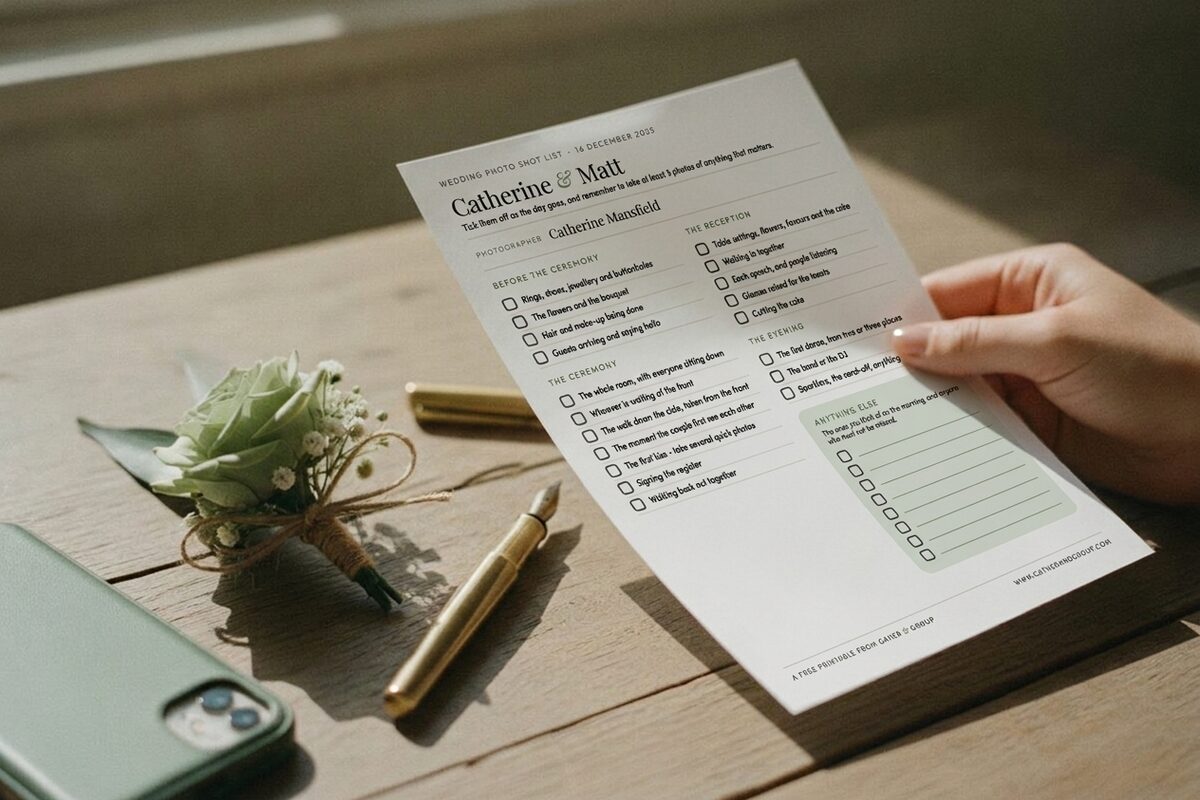
Every wedding photographer works from a list like this one. Print it, tick things off as you go, and nothing important gets forgotten in the excitement.
Print two copies, one for the photographer and one for the group photo helper. A note on their phone is not the same, because their phone will be busy taking the pictures.
Make your own shot list with our free tool. Not every line below will fit your day. A list that asks for a photo of grandparents who have passed away is worse than no list at all. Our shot list builder lets you tick the shots you want, add your own, and download a PDF to print with your names on it. No sign up and no email address needed. If you would rather print the whole thing, here is the full list as a PDF.
Wedding photo shot list ideas, in the order the day happens
These are ideas to pick from, not a list to get through. Cross out anything that does not fit your day and add anything that is special to you, or use our free shot list tool to tick the ones you want and print a tidy copy.
Before the ceremony
- The venue, empty and set up, before anyone arrives
- The dress hanging up, and the suit or outfit hanging up
- Rings, shoes, jewellery, the bouquet and the flowers for the lapels
- Invitations, place cards, the table plan and anything handmade
- Hair and make up being done, and the room in its mess
- Getting into the dress, and the face of whoever is helping
- Each of you, ready, on your own. One from a distance and one close up
- Each of you with your own parents
- Each of you with your bridal party or closest friends
- Guests arriving and greeting each other outside
The ceremony
- A wide shot of the room with everyone seated
- Whoever is waiting at the front, before the other one walks in
- The walk down the aisle, taken from the front, showing faces
- The first look between the two of you
- The vows, and the faces of the people watching
- The rings going on, close up
- The first kiss, with the button held down for a run of photos
- Signing the register or the licence
- The walk back out together
- Parents and grandparents during the ceremony
Straight after the ceremony
- Confetti, with the button held down, taken from in front of the couple
- The hugs and congratulations in the first five minutes
- The two of you, just after, when it sinks in
- Drinks being handed round, and guests chatting
- The wedding car or transport, arriving or leaving
Group photos
Write these out as a list before the day, with real names on it. "Dad, Grandma, Aunt Jean and Uncle Pete" works. "The family" does not. Ten groups is plenty and takes about twenty minutes. Any more and your guests start drifting back to the bar.
- The couple with each set of parents
- The couple with both families together
- The couple with brothers and sisters
- The couple with grandparents
- The couple with the whole bridal party
- The couple with any children in the family
- Each of you with your own oldest friends
- Anyone who travelled a long way to be there
- One big photo of absolutely everyone, taken from as high up as possible
- Anyone who is elderly or unwell, done early while they are fresh
The two of you, on your own
- Ten to fifteen minutes, away from the crowd, in soft light rather than harsh midday sun
- Head to toe, showing the whole dress and the shoes
- Waist up, with both faces clear
- Walking away, holding hands, not looking at the camera
- Something that shows the venue or the view behind you
- One or two where you are just talking to each other and ignoring the phone
The reception
- The room set up, before guests come in
- Table settings, flowers, favours and the cake
- The couple walking in
- Each speech, plus the faces around the room
- Toasts, with glasses raised
- Cutting the cake
- Guests eating, laughing and talking at their tables
- A photo of each table, so every guest is in at least one photo
The evening
- The first dance, from two or three spots
- The dance floor filling up
- The band or DJ
- Late night food
- Anything that only happens once, such as sparklers or a send off
- The last photo of the night, whatever it turns out to be
Here is roughly how the day splits up, to help your photographer pace themselves:
| Part of the day | What to get | Rough time needed |
|---|---|---|
| Getting ready | Details, getting ready, photos with family | 45 to 60 minutes |
| Ceremony | Walking in, vows, rings, kiss, walking out | As long as it takes |
| Confetti and drinks | Confetti, hugs, guests chatting | 20 minutes |
| Group photos | Eight to ten named groups | 20 minutes |
| The two of you | Ten to fifteen photos, just the couple | 15 minutes |
| Reception | Room, speeches, cake, a photo of each table | Spread across the meal |
| Evening | First dance, dance floor, late night | The first hour is enough |
Phone photo tips to give your photographer
Pass these on with the shot list. They take two minutes to read, and they are the difference between photos you keep and photos you delete.
1. Clean the lens before you start
Phone cameras live in pockets and against faces. A smudged lens puts a milky haze over every single photo taken all day, and it is invisible on a small screen until you look properly later. Wipe it on a soft cloth, or on your shirt or dress if that is all you have, each time you take the phone out of your pocket or bag.
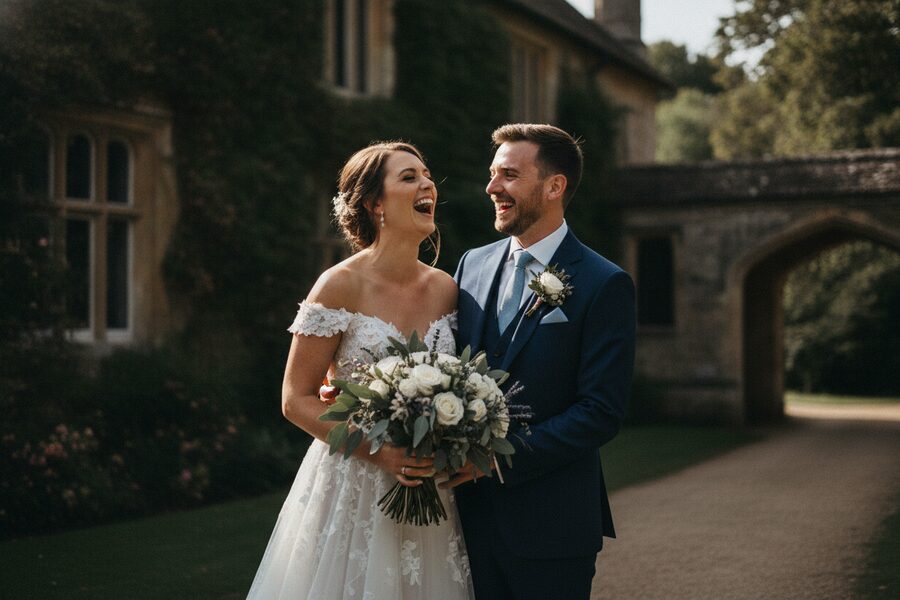
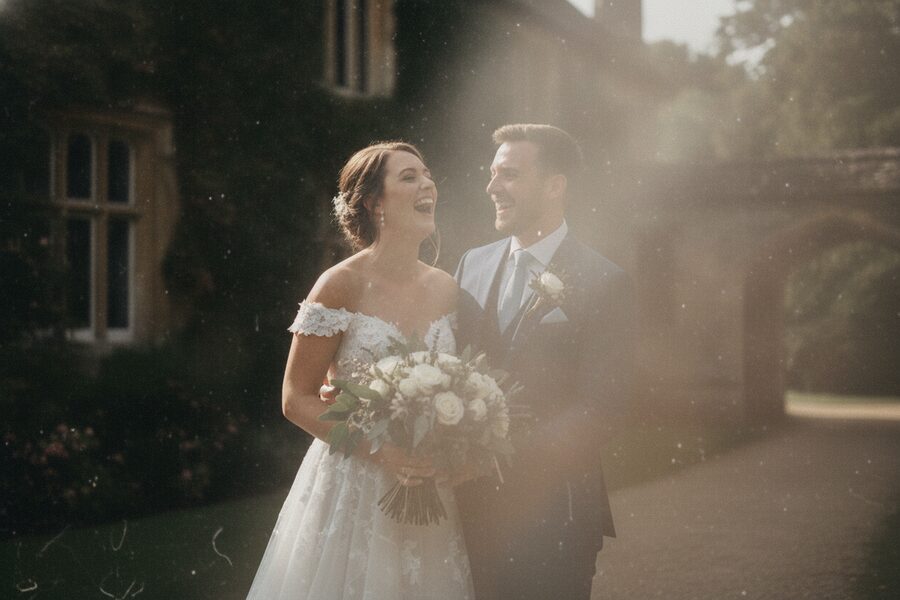
2. Have the light on their faces
The most common phone photo failure at a wedding is a couple standing in a doorway or in front of a window, coming out as two dark shapes. Phones set the exposure for the brightest thing in the frame. Move around so the light is falling on the faces, or ask the couple to turn towards it.
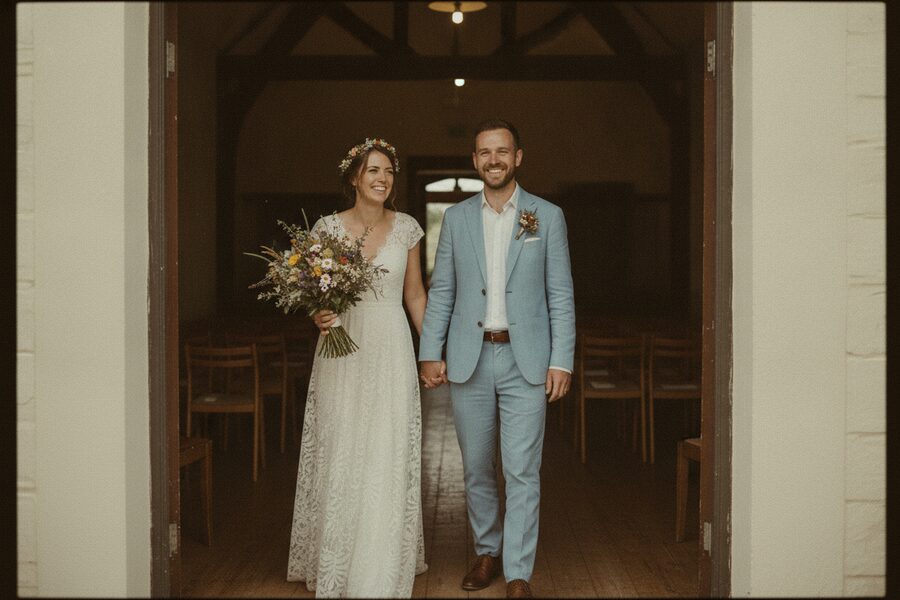
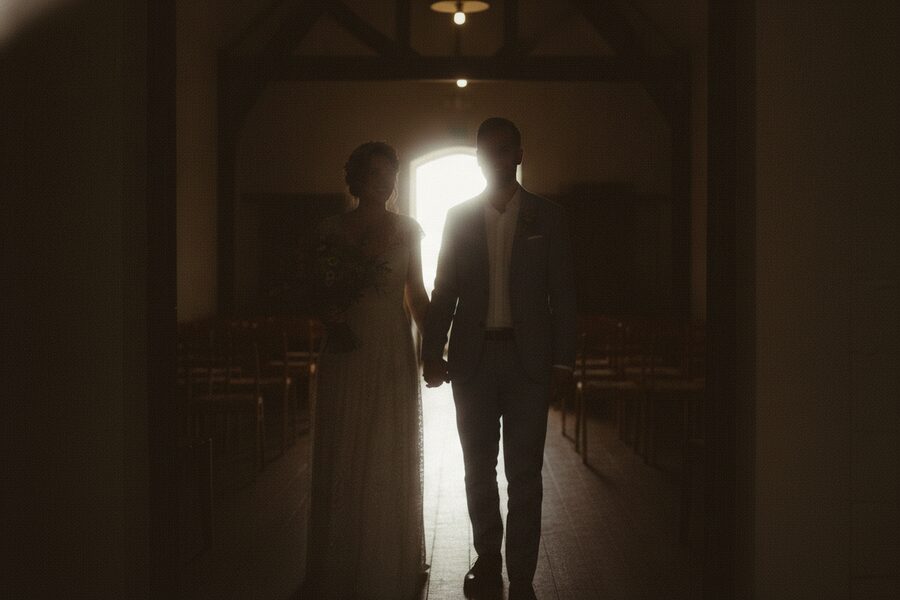
3. Check what is behind everyone
Nobody notices the bins at the time. They notice them for the next fifty years. Before a group photo, take two seconds to look behind the group for cars, bins, signs, stacked chairs and lamp posts growing out of people's heads. Moving the group a few steps is usually enough.
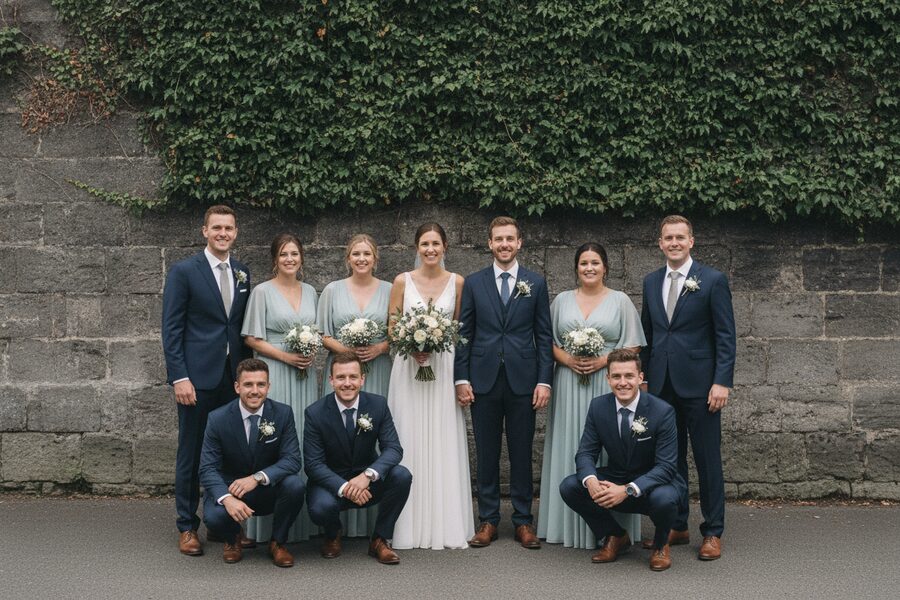
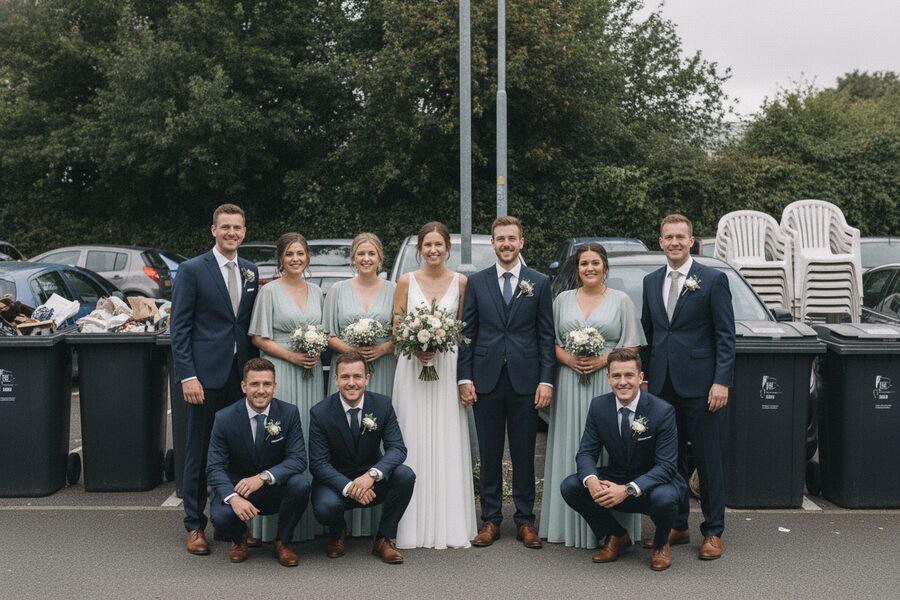
4. Walk closer instead of zooming in
Pinch zoom on a phone mostly throws away detail. Anything past about two times zoom turns soft and grainy, and it gets worse in low light, so move your feet instead. Photographers at a ceremony work from the end of the aisle or the side of the front row rather than from the back.
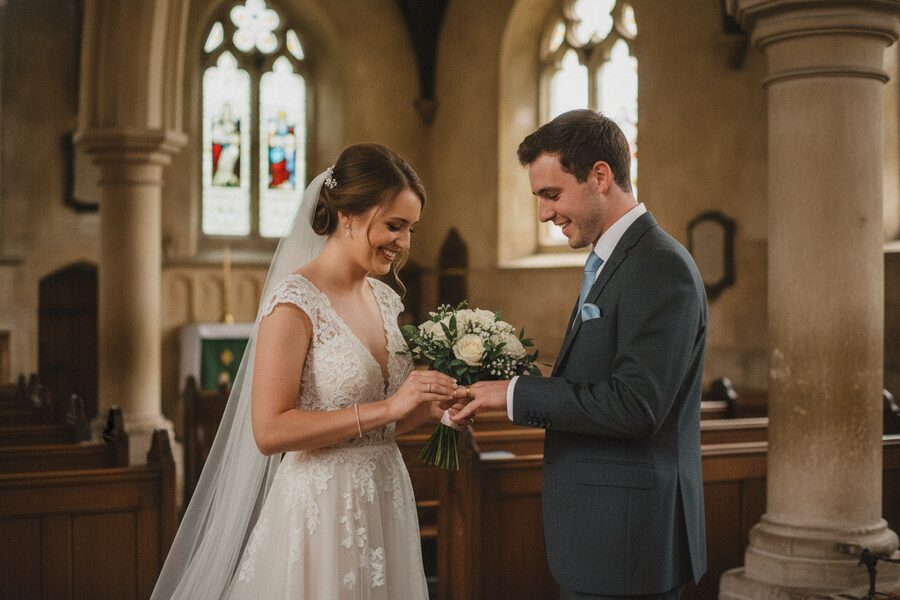
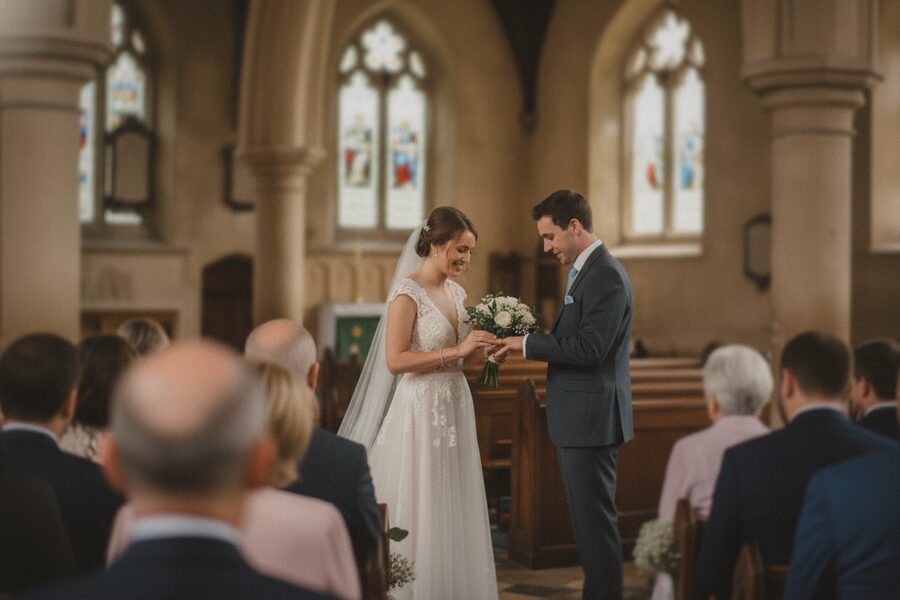
Eight more things worth knowing
- Tap the face on the screen before you shoot. This tells the phone what to focus on. On most phones you can then slide your finger up or down to make the shot brighter or darker.
- Take three of everything that matters. Someone blinks in the first one. It costs nothing.
- Hold the button down for anything that happens once. Most phones then take a fast run of photos. Use it for the first kiss, the confetti and the bouquet toss, then pick the best one later.
- Take photos both upright and sideways. Upright suits people, and sideways suits rooms and groups. Albums need both.
- Get down to eye level. Crouch for children. Hold the phone at chest height rather than above your head. Photos taken from above always look like snapshots.
- Flash off indoors, on outdoors. Flash ruins a nicely lit room. In bright midday sun it fills in the dark shadows under eyes. Late at night it beats a blurry mess.
- Check space and battery before you leave. Free up at least 10GB, start at 100 percent and bring a power bank. Running out at 6pm is the classic way to miss the first dance.
- Upload everything in the days after the wedding. Do it before the phone gets dropped, lost or wiped. Upload the originals, and not the small copies from a group chat.
One for the couple. Tell your photographer they are allowed to stop, eat, drink and dance. The photos get worse if they spend nine hours behind a screen and never get to enjoy your wedding!
Do not rely on one phone
Your photographer is one person with one phone, while the other sixty people in the room are also taking photos all day. Between them they see everything your photographer misses: the table they never got to, the ceremony from the other side, and the bit of the evening after they went home.
Without a professional, those guest photos stop being a nice extra and become your actual wedding album, which makes it worth setting up somewhere for them all to land instead of hoping people remember to send things.
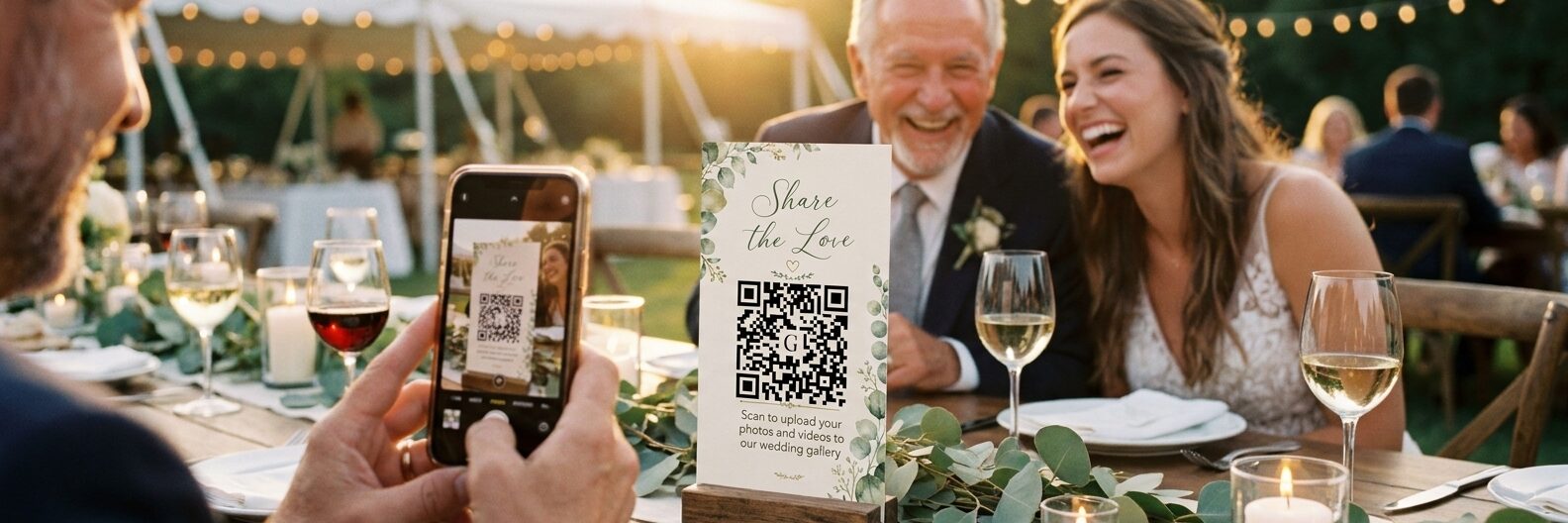
The simplest version is a QR code on each table that opens straight to an upload page, with no app to download and no sign up. Every Gather & Group plan includes a QR card design you can download and print at home, or you can order professionally printed QR cards delivered to your door. Every photo, from your photographer and from everyone else, lands in one shared wedding gallery at full quality.
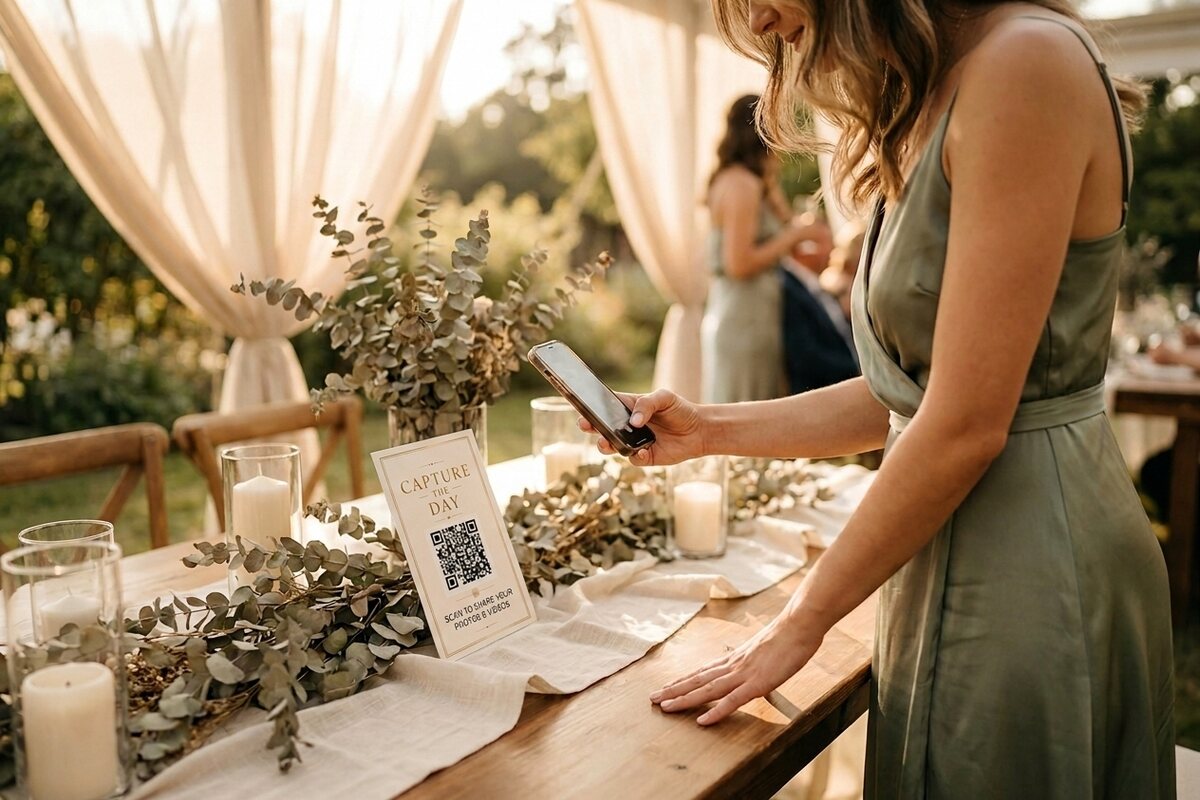
It also does the sorting for you. A few hundred photos from thirty people arrive in no order, with eleven near identical copies of every group shot. Gather & Group sorts them by who is in them using face recognition, hides the blurry ones and the duplicates, and lets you download the lot in one go. You can also turn the best ones into a printed photobook.
If you would rather not pay for anything at all, that is a real option too. We have written up the free ways to collect wedding photos from guests, and where each one falls down. And if your wedding has already happened, start with how to collect wedding photos after the day.
Cheaper ways to get some professional photos
It does not have to be all or nothing. A few middle options are worth knowing about before you rule a photographer out completely.
| Option | Roughly what it costs | Worth knowing |
|---|---|---|
| A photographer for a few hours | £400 to £800 | Two or three hours covering the ceremony, the group photos and the two of you. Many photographers will do this if you ask, even if it is not on their website. Your guests cover the rest of the day. |
| A student or someone starting out | £150 to £500 | Ask to see a whole wedding they have shot, rather than their best few photos. Someone building up their work can be very good. Check they have shot in the kind of light your venue has. |
| Ask for it as a wedding gift | Whatever guests give | If you do not need a toaster, ask guests to chip in towards a photographer instead. Some couples pay for the whole thing this way. |
| Photo booth | £250 to £500 | You get a photo with almost every guest, which is the thing DIY weddings most often miss. It does not cover the ceremony. |
| Disposable cameras | £10 to £15 each, plus developing | They are fun as an extra, but risky as your main plan. One per table costs over £100, a lot of the photos come back unusable, and you wait weeks to find out. |
Frequently asked questions
Can you have a wedding without a photographer?
Yes. Ask one friend to be your photographer, give them a printed shot list so nothing gets forgotten, and set up one place where their photos and every other guest's photos land. It suits relaxed daytime weddings best. You give up two things: someone whose only job is your photos, and good photos in very dark rooms. Gather & Group gives you that one place. Guests scan a QR code, upload from their own phones with no app, and every photo lands in one wedding gallery at full quality.
Will we regret not having a wedding photographer?
Regret usually comes from leaving it to chance. If nobody is in charge, you end up with hundreds of blurry dance floor photos and no photo of your grandparents. The two photos couples miss most are one good picture of the two of you, and one with each guest. Put those on the shot list and have one named person get them, and you will have what matters. Collecting every guest's photos in one gallery also means the moments your friend missed still turn up, because someone else at the table caught them.
How much does a wedding photographer cost in the UK?
Most full day wedding photographers in the UK charge between £1,200 and £2,500 as of 2026, and more in London. Prices differ by country, but the pattern is the same. A photographer for two or three hours is often £400 to £800. A student or someone starting out might charge £150 to £500. Many photographers offer short packages if you ask, even when they are not on their website.
Are phone photos good enough for a wedding?
In daylight, yes. A photo from a recent phone prints well at the size of a sheet of printer paper and at twice that, which covers an album, a framed print and anything you post online. Phones are weakest in dark churches, candlelit rooms and from far away, where photos go soft and grainy. Ask people to upload the original files rather than sharing through a group chat, because chat apps shrink photos and that quality cannot be recovered. A Gather & Group gallery keeps the full-size originals, so what you print is what was taken.
What photos should a friend take at a wedding?
Work through the day in order: getting ready, the walk in, the vows, the rings and the first kiss, confetti, eight to ten named group photos, ten to fifteen minutes of the couple alone, the room, the speeches, the cake, and the first dance. Print the list, tick it off as you go, and take three of anything important.
How do you ask a friend to take your wedding photos?
Ask early and be clear. Say which hours you would like covered, for example from guests arriving until the first dance, and tell them they are off duty after that. Give them the shot list before the day, feed them, get them a drink, and thank them with a gift. Do not ask anyone in the wedding party, anyone giving a speech, or either set of parents.
What is the one thing that improves phone photos the most?
Clean the lens. A smudged lens puts a milky haze over every photo taken all day, and you cannot see it on the small screen at the time. After that, make sure the light is on people's faces rather than behind them, and walk closer instead of zooming in.
Where can I get a free printable wedding shot list?
Build one on our wedding photo shot list page and download it as a PDF. It is free and you do not need to give an email address. Tick the shots that fit your day, add anything special to you, put your names on the front, and print it for whoever is taking the photos. A page of phone tips comes with it.
How many photos will we get without a photographer?
A friend working from a shot list will usually take a few hundred usable photos. Add the rest of your guests and most weddings end up with several hundred photos in total. The problem then is sorting them rather than having too few. Gather & Group's Premium plan does that sorting for you. It groups photos by the people in them using face recognition and filters out the blurry shots and duplicates, so you can find every photo of your grandparents in seconds.
Are disposable cameras a good alternative to a photographer?
Yes as a fun extra, but not as your main plan. Disposables cost about £10 to £15 each before developing, so one on every table soon runs past £100. A lot of the photos come back unusable, and you wait weeks to find out. Use them alongside guest phone photos rather than instead of them. A QR code on each table does the same job for a fraction of the cost, with photos you can see the same day.
What is the cheapest way to collect all the wedding photos in one place?
One link or QR code that every guest uploads to. Free options such as a shared album or a group chat can work, but they shrink photos or need everyone to have the right app, and we cover where each one falls down in our post on free ways to collect wedding photos. Gather & Group costs less than putting a disposable camera on every table, works from any phone with no app to install, keeps the originals, and comes with a free trial so you can try it before the day.
Doing your wedding photos yourselves? Try Gather & Group free and give every guest one link to upload to. Your photographer's shots and everyone else's end up in the same place, sorted by who is in them.