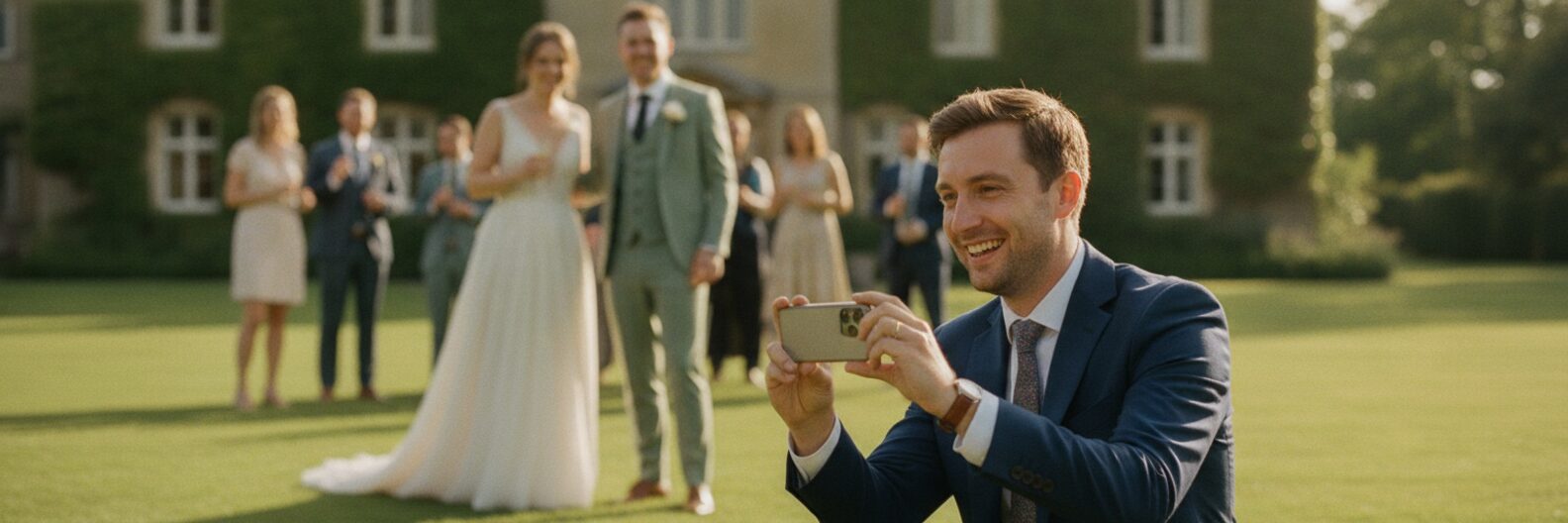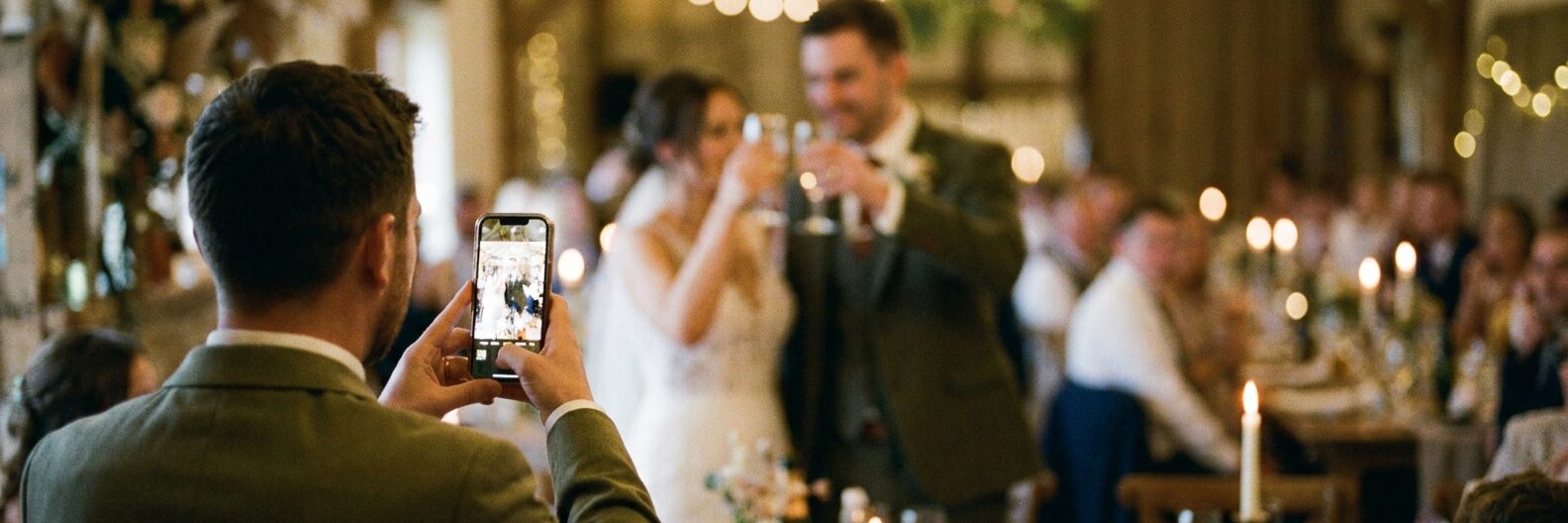
You've just booked a photographer for £2,000. You've spent weeks choosing them, comparing portfolios, reading reviews until your eyes blur. They feel like the right fit for your day.
Then a friend mentions you should set up a guest photo sharing app. Suddenly you're worried. Will your photographer think you don't trust them? Will they roll their eyes when guests start lifting phones during the ceremony? Will it somehow undermine the work they've been hired to do?
It's a fair concern, and one that comes up constantly in UK wedding planning groups.
Most photographers don't mind
Most UK wedding photographers are perfectly comfortable with guest photo apps. A growing number actively recommend them. A QR code that lets guests upload their phone photos to a private gallery does not compete with what a professional photographer offers. They're solving different problems.
Your photographer is there for the formal portraits, the carefully composed group shots, the moments they've trained years to anticipate and capture beautifully. They'll deliver somewhere between 400 and 800 polished, edited images over the following weeks. That's the core of your wedding album.
Guest photos are something else entirely. They're the candid hug between cousins at the bar at 11pm, the kids dancing at the back of the room, the speech reaction caught from the in-laws' table that your photographer was never positioned to see. These are different photos, taken from different angles, capturing different moments. They don't replace anything. They add.
What photographers mind
The things that frustrate UK wedding photographers have almost nothing to do with photo sharing apps and everything to do with guest behaviour around the ceremony itself. Specifically:
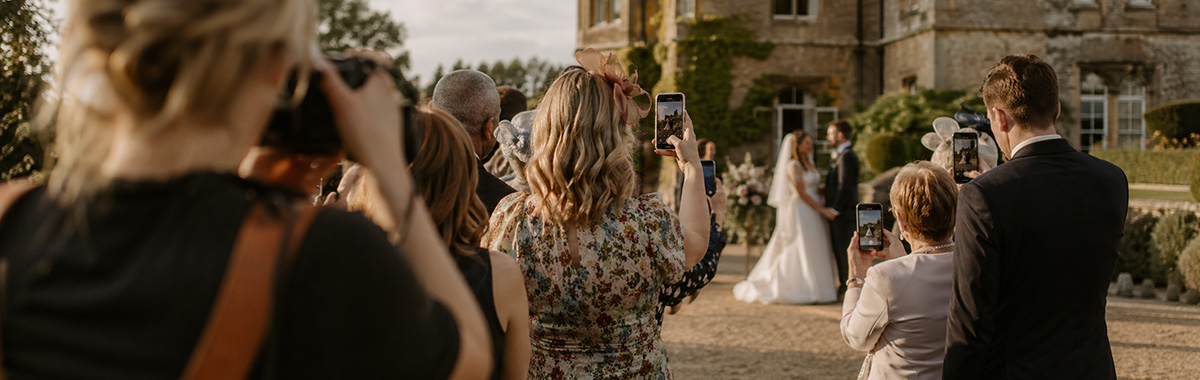
Phones blocking the aisle during the processional. You've paid for a photo of your partner seeing you walk down the aisle, and Auntie Margaret has stepped into the aisle with an iPad to film it. Your photographer has now lost the shot they were specifically positioned for. No editing software can fix that.
Flash photography during the ceremony. Most professional photographers work with carefully balanced exposure, often in tricky church or barn lighting. A guest's phone flash going off at the wrong moment can blow out a frame entirely, and modern phone flashes fire unpredictably.
Standing up during key moments. When a guest stands to take a photo of the first kiss, they put themselves directly between your photographer's lens and the action. The photographer can't move, because the moment is happening right then.
Posting photos before the couple do. This one's about courtesy more than craft, but it stings. Some couples specifically ask guests to wait so they can share the announcement themselves, and a guest who fires off an Instagram story during the speeches can take that away from them.
None of these involve a gallery that guests upload to afterwards. That doesn't interfere with anything. It's silent, invisible, and happens entirely in the guest's pocket.
What photographers like about guest photo apps
A growing number of UK photographers now suggest guest photo apps to their couples:
They take pressure off the photographer. When couples know they'll have hundreds of candid guest photos coming in, they're less anxious about asking the photographer to be in three places at once. The photographer can focus on what they're best at, instead of trying to cover every corner of the dancefloor while the speeches are happening at the head table.
They answer the "did anyone get a photo of..." question. Every photographer has heard this from a panicked couple a week after the wedding. "Did anyone get a photo of Granddad with the kids?" If the photographer didn't catch it, they can't conjure it. A guest photo gallery means the answer is usually yes, somebody did.
They keep guests off the photographer's back. When guests know there's a system for sharing, they're less likely to send awkward Facebook messages asking for copies, or to follow up the photographer for the photos they took on their own phone (yes, that happens too).
They protect the photographer's professional images. A well-organised guest gallery means couples are less tempted to use grainy phone snaps as their main wedding memories, because the gallery itself feels valuable and complete. The professional images stay the showpiece.
How this plays out on a real wedding day
The clearest way to see why guest photo apps and professional photographers coexist happily is to walk through a typical UK Saturday wedding hour by hour.
2pm to 3pm, the ceremony. Your photographer is fully focused, capturing the entrance, vows, ring exchange and first kiss. Guest phones are ideally away. If you've asked for an unplugged ceremony, this is a non-event. Either way, the wedding's emotional anchor shots are coming from the professional, as they should.
3pm to 5pm, drinks reception and group photos. Your photographer moves between candid mingling shots and the formal group photos you've requested. Meanwhile, guests are on canapés and prosecco, taking phone snaps of each other and the venue. These two streams don't compete. A few guests spot the table card here and upload shots from getting ready or the ceremony arrival, though most photos arrive the day after.
6pm to 8pm, speeches and dinner. Your photographer is positioned to catch reaction shots, the speakers, the laughter, the tears. Guests at the back tables (who can see things your photographer cannot from the front) capture their own table's reactions. These are exactly the photos couples treasure later: granddad wiping his eye during the father-of-the-bride speech, the bridesmaid laughing into her wine glass at a joke nobody else heard. Your photographer literally cannot be at every table.
8pm to midnight, dancefloor and party. Most photographers are contracted until 9pm or 10pm. After that, the guest photo app becomes the only camera left at the party. Late-night dancefloor moments, the couple's friends getting silly at the bar, the sparkler send-off. Without the app, those memories vanish into individual guests' camera rolls forever and never reach you.
The two systems aren't fighting for the same moments. They're filling in different parts of the same day.
How to keep your photographer happy
If you want to use a guest photo app and ensure your photographer feels respected, a few simple decisions go a long way.
Tell them you're doing it. A quick email mentioning that guests will have a QR code for sharing phone photos is appreciated. It's a courtesy, not a request for permission, and it means there are no surprises on the day.
Consider an unplugged ceremony. Ask guests to put phones away during the ceremony itself, then bring them back out for the reception. Most guest photo apps see the bulk of their uploads after the ceremony anyway, so you lose almost nothing by asking.
Place the QR code thoughtfully. Table cards, the bar area, the photo booth corner. Not at the altar, not glued to the order of service. The signage should feel like part of the reception decor, not a competing focal point during vows.
The real worry photographers have isn't guest photo apps
The concern modern wedding photographers raise isn't guest photo apps. It's the cumulative effect of every guest filming everything on a phone for personal use, posting it to TikTok or Instagram before the photographer's edits are even ready, and treating the wedding like a content creation event rather than a ceremony.
A well-run guest photo gallery pulls in the opposite direction. It gives guests a defined channel for sharing, sets expectations about privacy, and reminds everyone that the photos belong to the couple, not to the public internet. UK platforms like Gather & Group with proper privacy controls (private galleries, GDPR-compliant data handling, no public links to the photos) actively support photographers' interests rather than competing with them.
The bottom line
The fear that a guest photo app will offend your photographer mostly comes from imagining the wrong scenario. Photographers object to phones getting in their way, and a QR code in a guest's pocket doesn't.
Treat your photographer with the courtesy they've earned, run a thoughtful ceremony, and let the guest photos fill in around the professional album.
If you're ready to set up a private guest gallery for your UK wedding, you can try Gather & Group free here. No card needed, full quality uploads, and your photos stay on UK servers, fully GDPR compliant.