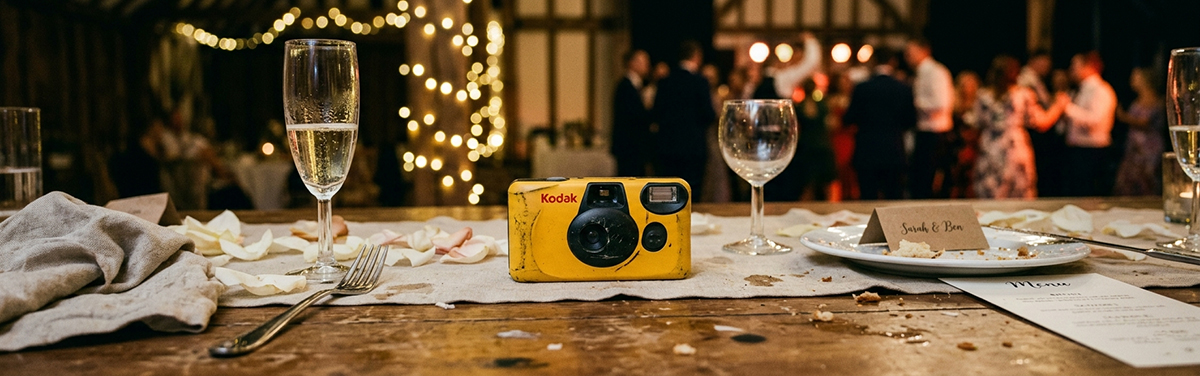
Few wedding ideas have the nostalgic pull of disposable cameras. You picture them on every table, guests picking them up between courses, and a stack of grainy, golden-toned photos arriving a few weeks later - full of candid moments and happy accidents.
It's a lovely image. But the reality of disposable cameras at a UK wedding in 2026 involves more maths and more frustration than most couples expect.
The real cost of disposable cameras
The sticker price of a disposable camera (£10-15) is only the beginning.
A typical UK wedding with ten reception tables needs at least ten cameras - one per table. Some couples buy fifteen to twenty, to cover the ceremony, the bar area, and a few spares. Let's work with twelve cameras as a sensible middle ground.
The cameras themselves cost roughly £10-15 each, so that's £120-180 upfront. But disposable cameras are useless until you develop the film. Standard film development and scanning in the UK runs around £10-15 per roll, depending on whether you want digital scans (you do - this is 2026). That's another £120-180 for development.
So the total comes to somewhere between £240 and £360 for twelve cameras. For a 27-exposure camera, that's 324 potential photos. In practice, you'll get far fewer usable images than that.
What happens on the day
A significant number of cameras - estimates vary, but a third is common - never make it back. They end up in guests' bags, in coat pockets, or abandoned under tables. Some guests don't realise they're meant to return them. Others take them home as a novelty.
Of the cameras that do come back, many have wasted exposures. Accidental shots with the lens cap on (or the finger over the lens). Blurry close-ups of the tablecloth. Photos of the ceiling. Kids burning through an entire roll in ten minutes taking photos of each other's shoes.
From a twelve-camera setup, you might realistically get 150-200 developed photos. Of those, perhaps 60-80 will be good - in focus, well-framed, with recognisable subjects. That's roughly £3-5 per usable photo.
And you won't see any of them for days or weeks, depending on how quickly your local lab turns around the development.
The quality question
Disposable cameras use fixed-focus lenses and basic flash units. In good outdoor light, they can produce lovely, warm images with a distinctive film grain. Indoors - which is where most UK wedding receptions happen - the results are much more hit-and-miss.
Low light is the enemy of disposable cameras. The flash has a range of about two to three metres, and anything beyond that fades into murky darkness. Dance floor photos, evening garden shots, and anything in a dimly-lit barn or marquee will struggle.
Modern smartphone cameras, by contrast, handle low light remarkably well. The phone in your average guest's pocket takes better indoor photos than any disposable camera on the market.
The alternative: a wedding photo sharing app
The core appeal of disposable cameras isn't about film - it's about giving guests a simple, fun way to capture candid moments and share them with you. A wedding photo sharing app does exactly the same thing, but using the high-quality cameras your guests already have in their pockets.
A dedicated app like Gather & Group costs £49. That's it - unlimited photos, unlimited guests, unlimited video, full resolution, 12-month access, and facial recognition that automatically groups photos by person. No development fees, no per-camera costs, no waiting.
For the price of three disposable cameras (and their development), you get a system that can collect hundreds of full-resolution photos from every guest at your wedding, delivered instantly to a private album you can browse, download, and share.
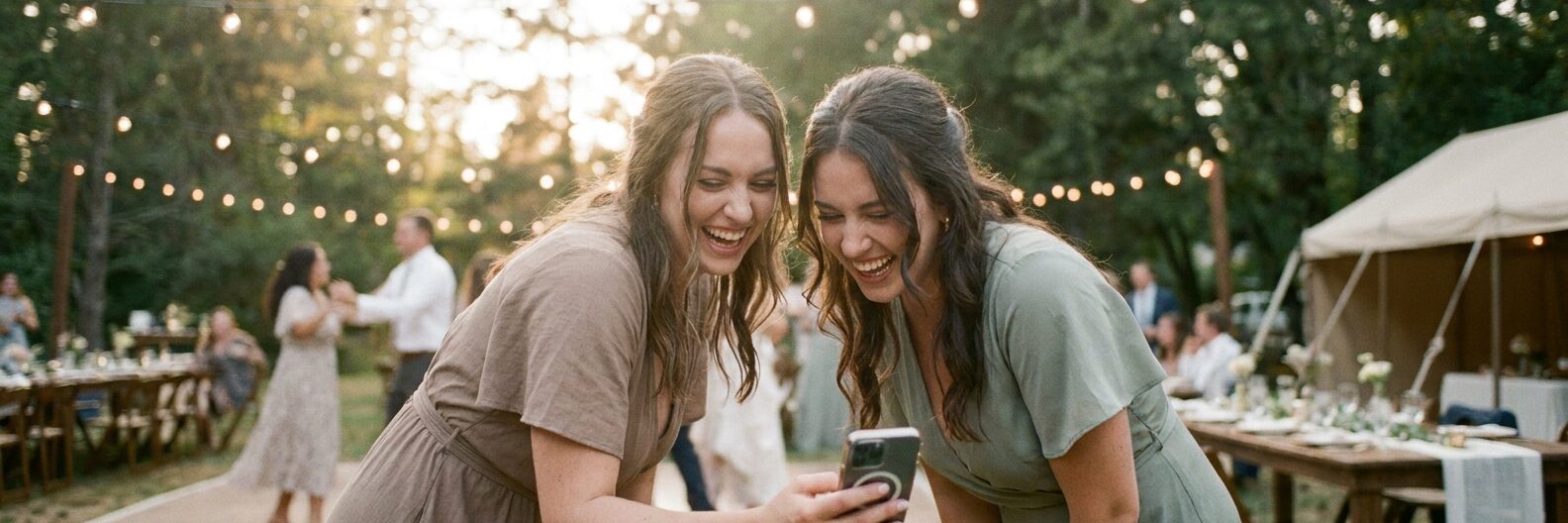
Participation is typically higher too, because there's no physical object to lose, forget, or take home. Guests scan a QR code from their phone, upload their photos, and get on with the party.
Can you have both?
Some couples love the idea of a hybrid approach: a few disposable cameras on tables for the novelty and aesthetic, plus a photo sharing app to catch everything else.
This can work, but be realistic about what the disposable cameras are for. Treat them as a fun table activity and a source of a few charming film-look images - not as your primary photo collection method. Put two or three cameras on the main tables (bridesmaids, family, your most enthusiastic friends) and rely on the app for comprehensive coverage.
If you go this route, budget for the disposable cameras as entertainment rather than photography. And make sure the QR code for your photo sharing app is right next to the cameras - when guests pick up a disposable camera, they should see the QR code too.
The environmental angle
Disposable cameras are single-use plastic devices containing batteries and chemical film. In a decade where sustainability is increasingly part of wedding planning, they're not the greenest choice. Most end up in general waste after development.
A photo sharing app has no physical footprint. Guests use their existing phones, and everything is digital. If reducing waste is part of your wedding values, this is an easy win.
The verdict
If you love the film aesthetic, buy two or three cameras for your closest friends and treat the results as a bonus. For collecting wedding photos from your guests, a purpose-built photo sharing app is cheaper and less hassle.
Gather & Group collects every guest photo from £29 - no film, no development, no waiting. Create your album in minutes.